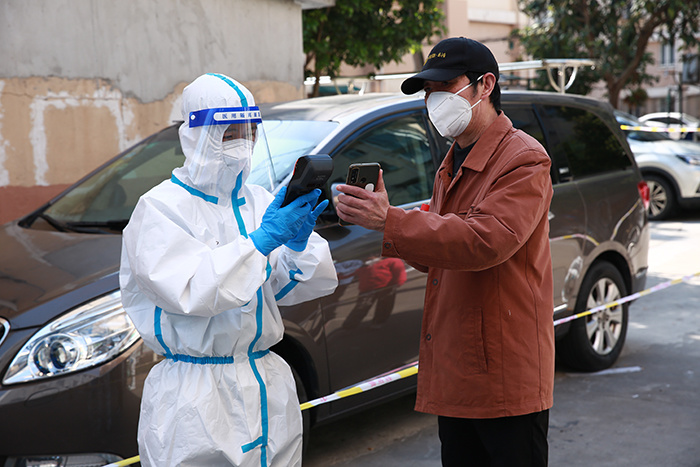
Since the lockdown of my residential community, I took the initiative to report to the community and became a community volunteer to carry out community epidemic prevention work on the spot. On April 15, I actively responded to the call of the party organization and became a member of the city's science and technology system to support the front-line anti-epidemic work team. That night, I packed my luggage early and prepared enough clothes and daily necessities to be called upon at any time.
On the morning of May 4, I had just finished the nucleic acid code scanning work in the community when I received an emergency notice from the city's science and technology system, requiring me to go to Huangpu District immediately to support the anti-epidemic work. The car for picking up personnel had stopped at the entrance of the community. I immediately rushed home, without taking a shower or changing clothes, picked up my suitcase, and said goodbye to my parents in a hurry before embarking on the anti-epidemic journey.
I joined a 50-member anti-epidemic vanguard commando team urgently formed by the Municipal Science and Technology Party Committee. That afternoon, a group of 6 of us followed the neighborhood committee cadres to the Chengxing neighborhood committee of Nanjing East Road Street to familiarize ourselves with the community environment. At that time, I felt that although the community was in the center of the city center, it was a prime location. However, the environment was not flattering, with old-style lanes, cramped space, and unsatisfactory kitchen and bathroom conditions, and epidemic prevention work faced considerable challenges.
The neighborhood committee cadres immediately assigned work tasks to each of us. Unexpectedly, I was assigned to the publicity position, responsible for the establishment of residents' WeChat groups and information release, the provision of anti-epidemic materials (taking photos, videos or editing text messages), the recruitment of community volunteers, daily work summary, reporting, etc. At that time, I was stunned when I heard the assignment results, and I thought I had heard it wrong. Propaganda is a "cross-border" field for me. But in a blink of an eye, since the task has been determined, I am determined to work hard to do it well.
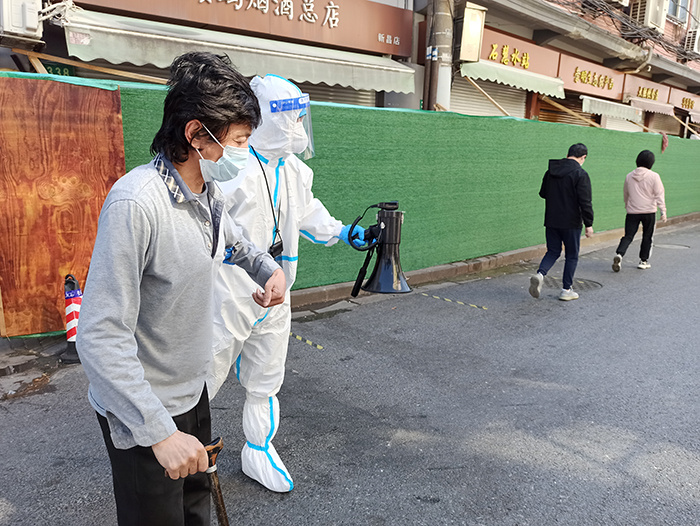
In order to collect good materials and record every detail of the anti-epidemic efforts, I shuttled through the streets and alleys, using my mobile phone to record the touching moments. The volunteers led the waiting residents into the nucleic acid testing area in an orderly manner, and took the initiative to assist the elderly who were unable to move or were old. The volunteers went deep into the corridors of old residential areas, went door to door to publicize the relevant requirements during the epidemic prevention period, and inquired about the needs and difficulties of the residents. They also met warm-hearted residents who met volunteers delivering vegetables and asked for directions, and voluntarily took the volunteers to the door of the destination building.

Of course, the work also encountered difficulties. Faced with a long list of names provided by the neighborhood committee, I called one by one to recruit volunteers, often encountering busy tones or rejections, and often needing to make multiple calls to confirm. Every time I answered the phone, I had to ask and persuade them earnestly. Some people simply refused, some hesitated to consider, and some agreed to join. But no matter whether they refused or hesitated, I would try to add WeChat first, treat it with an understanding and tolerant attitude, and maybe one day I would figure it out. At the same time, I also realized the hardships and difficulties of the work of neighborhood committee cadres. The epidemic prevention requirements of superiors, the difficulties of residents, and sometimes venting of resentment are all superimposed on them. No matter how difficult or aggrieved they are, the epidemic prevention work cannot stop for a moment.
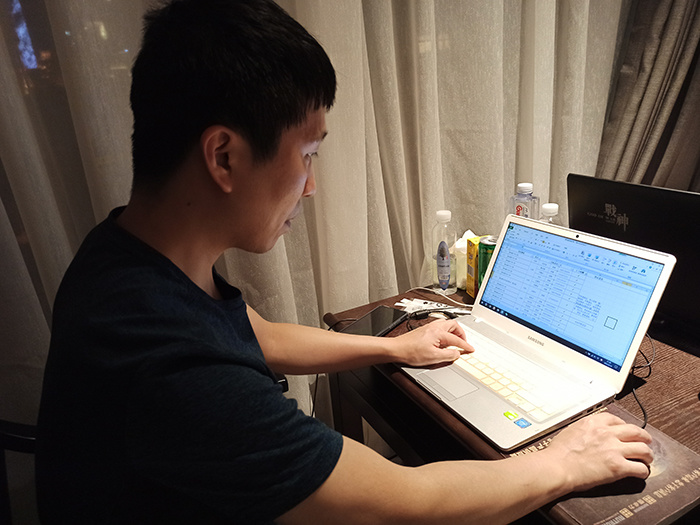
On the fourth day of sinking, my work was adjusted. I assisted the block leader in carrying out the registration of nucleic acid test notifications, personnel transfer notifications, and material distribution for residents in this block. Although I had the experience of recruiting volunteers for telephone communication before, I still encountered considerable difficulties and obstacles in the process of personnel transfer notification. There was a misunderstanding of transfer, some were worried about the transfer point, and some emphasized that it was difficult to transfer and isolate... In this regard, I always maintained a calm and peaceful communication with the residents. When I met residents with resentment, I listened patiently, did not vent my anger, did not argue, stood from the perspective of residents to understand and tolerate, explained the purpose and significance of transfer, the policy of "transfer as much as possible" and the transfer destination, etc., resolved doubts, eliminated resentment, and tried to meet the reasonable requirements of residents as much as possible without violating regulations. Except for some residents who did not have objective reasons (such as having elderly people at home who needed care), most of the residents who were initially unwilling to transfer agreed to transfer after my patient persuasion. That day, when I made the last call, I finally felt relieved and had a sense of accomplishment.
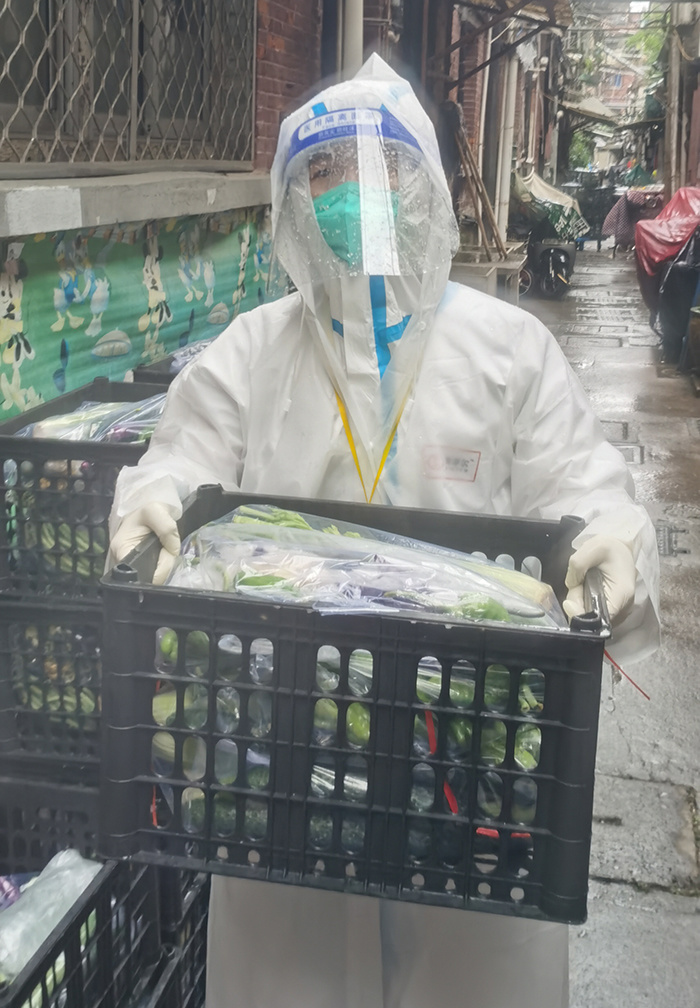
The distribution of materials is the basis of people's livelihood security, which must be accurate and timely. I remember that when the materials were delivered that day, the weather was not good, and it happened to rain heavily. Considering that vegetables are not easy to store for too long and need to be distributed in time, the block leader, my partners and I braved the heavy rain and carried the plastic boxes of vegetables again and again in the alleys of the community. At this time, the rain had wet the mask, and the inside was full of fog, the vision was hazy, and the two layers of protective shoe covers could not withstand the invasion of rain, and they made a "creaking" sound when walking. Even so, our enthusiasm for distribution was not extinguished by the rain. We still stepped on the puddles on the ground and bravely moved forward to deliver the materials to all residents.
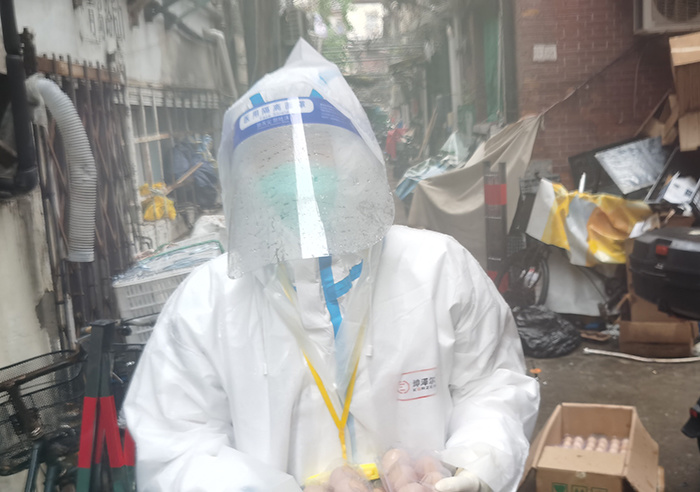
It has been nearly 20 days since we went down to the grassroots to fight the epidemic. Our familiarity with the residents and their trust in us have increased day by day, and the tacit understanding of nucleic acid testing has also increased. From the beginning, we had to ask the residents for basic information one by one to now almost "face recognition" and "registration". The nucleic acid test of nearly a thousand people can be completed in about 2 hours. The work of going down to the grassroots to fight the epidemic is hard, but very meaningful. Special times and special training are the accumulation of wealth in life. When I saw that there were no new positive cases in the community for 3 consecutive days, I was so happy that all my efforts were worth it.
(The author is Guo Jiawei, a young party member of Shanghai Instrument and Meter Research Institute)